What Is Cybersecurity? Everything You Need to Know in 2026
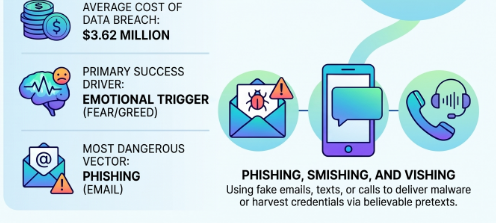
In the digital era where phishing emails, ransomware attacks, and data breaches etc. cannot be ignored and people need to be understanding cybersecurity. Most breaches don’t start with some elite hackers; however, they start with a tired employee clicking a link. This guide breaks down what cybersecurity is, the threats you face, and how to protect yourself.
What Is Cybersecurity?
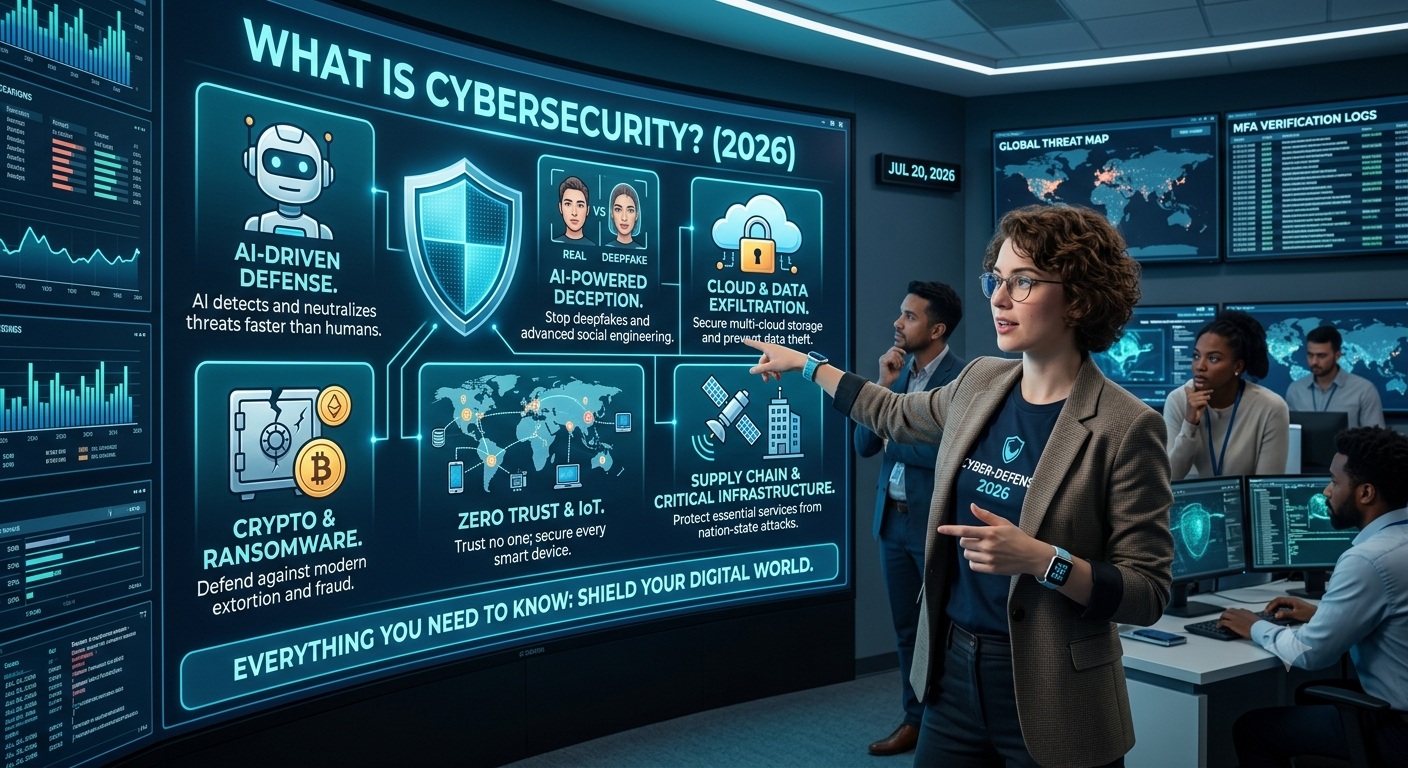
Most cyber incidents start with a person, not a machine. One careless click can undo even the most sophisticated software protections. So what is Cybersecurity? Cybersecurity is protecting computers, servers, phones, networks, and data from people trying to break in. You’ll also hear it called IT security or computer security, and it spans everything from business infrastructure to your personal smartphone.
1. The Six Domains of Cybersecurity
| Domain | What It Protects |
| Network Security | Computer networks from intruders and malware |
| Application Security | Software and devices from threats, addressed starting at the design stage |
| Information Security | The integrity and privacy of data, in storage and in transit |
| Operational Security | The processes and decisions used to handle data assets |
| Disaster Recovery & Business Continuity | How organizations respond to and recover from incidents |
| End-User Education | Training users so they don’t become the weak link phishing clicks, weak passwords, and so on |
The current threat landscape illustrated that IBM’s 2025 Cost of a Data Breach Report puts the global average at $4.44 million per breach.
2. Basic Cybersecurity Responsibilities To Be Aware Of:
- Protects Your Personal Information by Encrypting keeps your private stuff private and please do not your passwords, emails, photos, or banking logins ever leave your device, they get scrambled into gibberish.
- Prevents Identity Theft by stopping criminals from getting your name, ID number, or birthdate and using them to pretend to be you.
- Keeps Your Money Safe by cutting down the risk of banking fraud, unauthorized card charges, and fraudulent transfers.
- Protect Your Businesses from Cyberattacks by helping companies protect their operations, customer data, and finances from cyberattacks.
- Defends Against Viruses and Malware by Blocks harmful programs, like viruses, trojans, and spyware, from infecting your devices.
- Secures Your Online Accounts by making sure only authorized users can log in to your accounts, wherever they’re hosted.
- Protects Your Privacy by preventing online advertisers, hackers, and other snoops from tracking what you do online, your messages, your searches, all of it.
- Makes Online Shopping Safer by protecting your credit card information and helps you avoid falling victim to fake online storefronts.
- Keeps Social Media Accounts Secure by your social media accounts from such as Facebook, Instagram, LinkedIn, TikTok and etc. from getting hijacked.
- Protects Remote Workers by allowing employees working from home or a coffee shop connect safely to their company’s internal systems.
- Safeguards Smart Devices by securing Internet of Things (IoT) devices including smart TVs, security cameras, home assistants, and routers.
- Prevents Phishing Scams by spotting phishing emails, audio, video and texts before they trick you into handing over sensitive info.
- Keeps Schools and Universities Safe by ensuring schools and universities such as student records, grade portals, online learning tools, research databases, all of it
- Protects Critical Services by involving or reporting your cyber incidents to authorities or relevant stakeholders.
- Builds Trust in the Digital World by making people and businesses more comfortable using digital tools, paying online, and trying new tech.
3. Common Cyber Threats in 2026
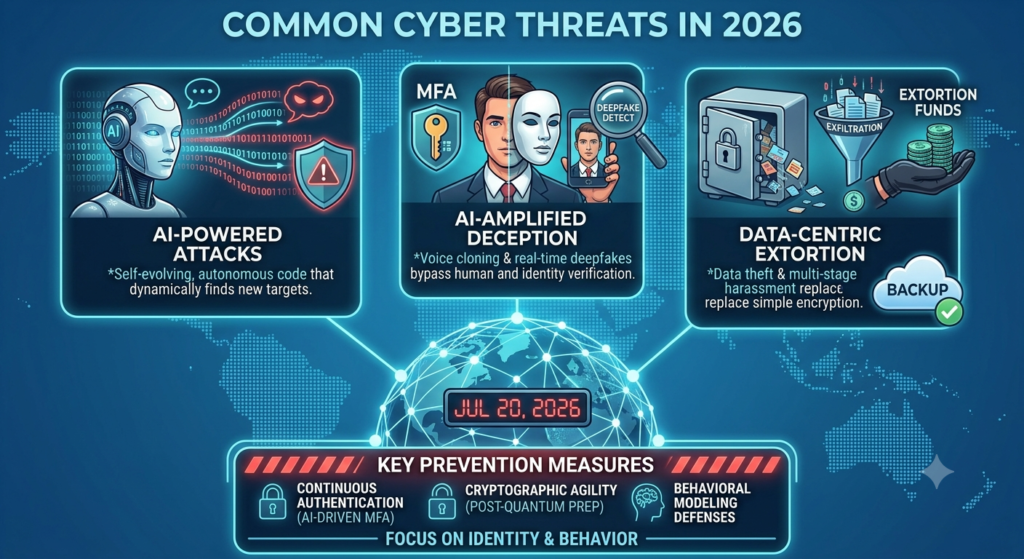
- Phishing Attacks. These are fake emails, texts, or websites built to get you to hand over your passwords or financial details.
- AI-Powered Scams. Criminals use AI to fake messages, voices, images, and video that look and sound convincingly real.
- Ransomware. This is malware that locks up your files and demands payment before you can get them back.
- Deepfakes. These are AI-generated audio or video clips made to look like a real person, used to spread lies or pull off fraud.
- Identity Theft. Someone steals your personal information to get into your accounts, make purchases, or commit crimes in your name.
- Password Attacks. Hackers break into accounts using stolen, weak, or reused passwords.
- Malware. This covers viruses, worms, spyware, and trojans, all software built to damage devices or steal data.
- Business Email Compromise (BEC). Attackers pose as executives, suppliers, or coworkers to talk employees into sending money or sensitive data.
- Data Breaches. Confidential data gets exposed through hacking or a security gap.
- Cloud Security Attacks. A misconfigured cloud service leaves sensitive data exposed to attackers.
- Internet of Things (IoT) Attacks. Unsecured smart cameras, routers, and wearables become easy targets.
- Supply Chain Attacks. Attackers break into a trusted vendor to reach that vendor’s customers all at once.
- Distributed Denial-of-Service (DDoS) Attacks. Attackers flood a website or service with traffic until it goes offline.
- Cryptocurrency and Investment Scams. Fraudsters run fake investment opportunities, fake exchanges, and phishing schemes aimed at digital assets.
- Insider Threats. An employee, contractor, or other trusted person exposes sensitive systems or data, whether deliberately or by accident.
Cybersecurity is not individual responsibility but together to control it
Cybersecurity is essential because most breaches stem from everyday human errors such as clicking a deceptive link without verifying source of the link. Good cybersecurity protects your privacy, your money, your business, and the public services you depend on. It scrambles sensitive data so it’s unreadable to anyone who intercepts it, stops identity theft, and keeps your accounts from getting hijacked. If at the same time, users may face an evolving array of cyber threats designed to exploit human trust and system vulnerabilities. The threats run from the old standbys, like malware, ransomware, password attacks, and phishing, to newer ones like AI-powered scams, deepfakes, and crypto fraud. Organizations also have to worry about attacks on a bigger scale. Therefore, making widespread awareness and proactive habits the most critical line of defense in the modern world