GPT-6 Astra: What a ‘Next-Generation’ AI Might Actually Look Like
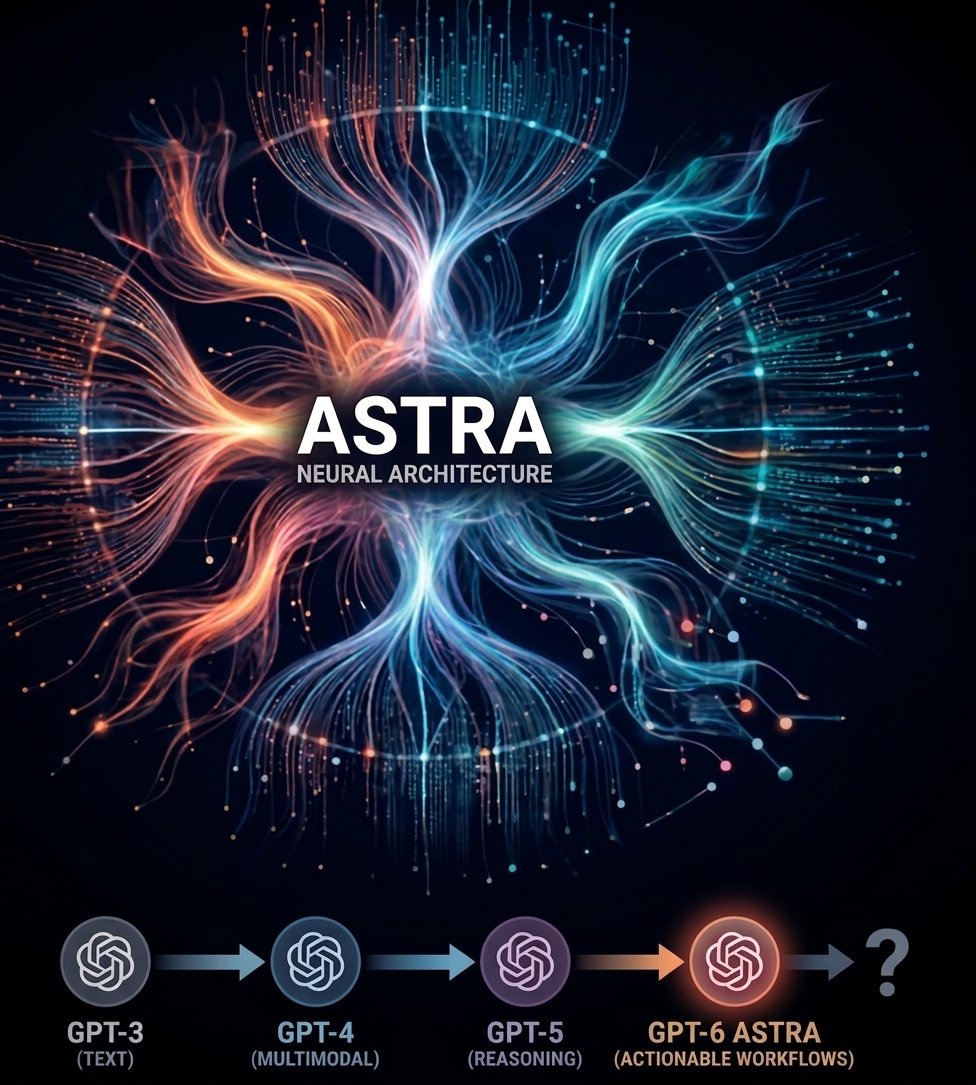
AI keeps getting talked about in two registers: the boring, incremental one (slightly better benchmarks, slightly fewer hallucinations) and the sweeping, futuristic one (AI as partner, as agent, as collaborator). GPT-6 Astra sits in the second camp – or at least it did until OpenAI actually shipped it, on September 3, 2026, as the successor to GPT-5.6 Sol. Whether or not anything called Astra ever ships, the idea behind it is worth taking seriously: a system built less around single responses and more around reasoning, multimodal understanding, coding, retrieval, and automation, tied together well enough that it functions as an actual working partner rather than a search box with better grammar.
The Easiest Part for Answering questions
Current chatbots are genuinely good at explaining things. Ask about cybersecurity frameworks and you’ll get a competent overview. But explaining a framework and building a security program are different jobs. The second one means understanding an organization’s specific gaps, writing the actual plan, producing training material, and tracking whether any of it worked. That’s the shift a system like Astra points toward – from “what’s the answer” to “can you help me get this done.” It sounds like a small change in phrasing. It isn’t.
Reasoning that holds up for this generation
Policy decisions, security architecture, business strategy – these all involve trade-offs nobody fully agrees on. A government agency weighing an AI project has to think about data protection, legal exposure, budget, staffing, infrastructure, public trust, and whether the thing is even sustainable five years out. That’s not a paragraph. That’s a decision framework, and it’s the kind of structuring work a stronger reasoning model could actually help with instead of just gesturing at. Therefore, most professional problems don’t have one right answer, but GPT-6 Astra may can help. One of the most important potential capabilities of a future GPT-6-generation system would be stronger reasoning that could break complicated problems into smaller components, evaluate different approaches, identify assumptions, and explain why one option may be preferable to another.
A New Generation of Software Development
Software developers could also benefit significantly from a system like GPT-6 Astra. Future AI systems may increasingly operate as development partners capable of understanding entire projects rather than isolated code snippets. A developer could describe a business requirement and receive assistance with:
- System architecture
- Database design
- API development
- Front-end interfaces
- Testing
- Documentation
- Security reviews
- Debugging
- Deployment planning
- Maintenance
For developers, the interesting version of this isn’t “writes code faster.” It’s a system that understands the whole project – architecture, database design, API surface, front end, tests, security review, deployment – well enough to explain why something should be built a certain way, not just spit out a function that compiles. That matters more for government systems, enterprise software, and anything security-sensitive, where the wrong architectural choice costs you later, not now.
Personalization
People don’t communicate in plain text. They send spreadsheets, diagrams, screenshots of dashboards, half-finished slide decks, recordings of meetings nobody wrote notes for. A model that can only read prompts misses most of that. A teacher handing over lecture slides, a rubric, and a stack of graded assignments should be able to ask, “where are the gaps” and get something useful back. A security team should be able to hand over logs, a network diagram, and an incident report and get a real assessment, not a summary of what each file individually says. Regarding to One model, and very different users, for instance, a professor wants an academic explanation. A developer wants precision. A business owner wants market context. A government official wants something policy shaped. Getting all of that right means the model has to adapt – tone, depth, vocabulary – without turning into a privacy problem in the process. Knowing what it’s allowed to remember, what has to stay private, and when to just ask, is arguably harder than the personalization itself.
From chatbot to agent
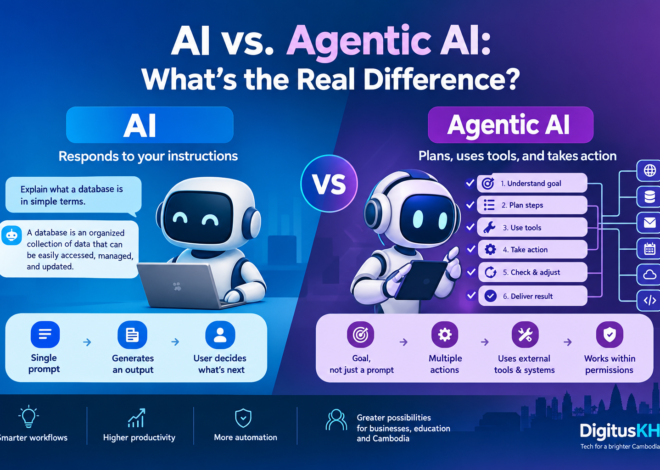
The bigger shift, honestly, is agentic behavior. A chatbot waits for you to ask something. An agent can take a goal and go do the intermediate steps itself. Say a business owner asks: analyze our site, find the five biggest SEO problems, write a plan, produce the content to fix it. An agent could split that into pieces, run the analysis, draft the plan, write the content, and check back in before doing anything that can’t easily be undone. Humans don’t disappear from this picture. Their job just moves – less doing every step, more setting the goal and catching the mistakes.
The security question doesn’t go away
A highly capable AI system could become extremely useful, but misuse could create significant risks. Future systems will therefore need robust security mechanisms, access controls, monitoring, privacy protection, and safeguards against malicious use. Any organization adopting something like this needs real answers to a short list of unglamorous questions as below:
- What data can the AI access?
- Who can use it?
- What decisions can it make?
- Which decisions require human approval?
- How are AI actions logged?
- How are errors detected?
- How is sensitive information protected?
- What happens when the AI produces an incorrect recommendation?
Government is the hard case
Public institutions produce a staggering amount of paperwork – policy documents, regulations, correspondence, statistics. AI that can navigate that is genuinely useful for policy research, document review, and monitoring. But government use needs tighter guardrails than a consumer chatbot. Decisions that affect citizens shouldn’t get quietly handed to a model without a human checking the work, without transparency, without someone accountable when it’s wrong. Put simply: not “AI replaces government,” but AI making government more responsive and evidence-based while a person stays on the hook for the outcome.
The Astra Vision
The interesting claim behind Astra isn’t “smarter model.” It’s a model that can reason, create, and act across an entire workflow instead of one prompt at a time – a researcher for a student, a coding partner for a developer, an analyst for a business, an adviser for an organization. But none of that is guaranteed to go well just because the technology exists. How it plays out depends on how it’s governed and deployed, not on how capable the underlying model gets. The real question isn’t whether AI stops being just a question-answering tool. It’s what happens to accountability once it starts doing things on its own – and whether the people building it take that as seriously as they take the benchmark scores.