AI Agents in 2027: Transforming Business and Cybersecurity
AI agents are moving past writing text and answering questions. They can carry out tasks, work inside company systems, make decisions and deal with other digital services on their own. That opens up business opportunities. It also creates security and governance problems that many organizations haven’t faced yet. AI is shifting from a tool people use to one that can finish complex jobs by itself. The industry calls this agentic AI, and technology company Infoblox expects it to be a major force in business and cybersecurity in 2027. Its prediction is that wider use of autonomous agents will change how organizations run operations, manage IT infrastructure and defend their systems. Agents can raise productivity, cut operating costs and speed up decisions. They also bring new risks. Organizations will need to know which agents are running in their environments, what data those agents can reach and what they are allowed to do. The harder question now is how to adopt AI securely.
From AI Assistants to Autonomous AI Agents
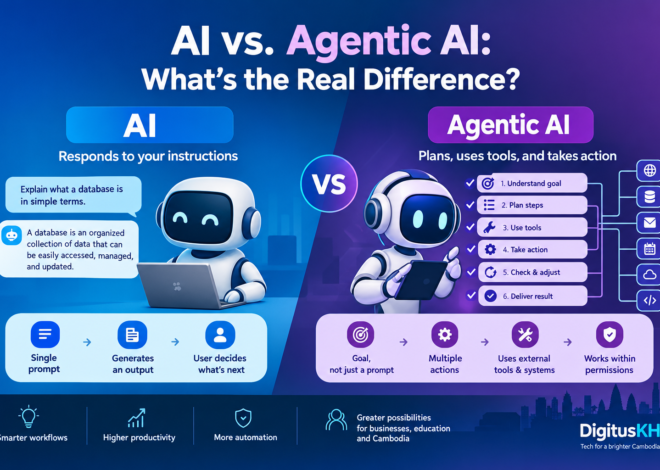
A traditional AI tool responds to a person. You ask a question, request a summary, generate a document or analyze some data, and it answers. An agent works differently. You give it an objective, and it plans the steps, uses applications and APIs, pulls in information and does the work, with more or less human supervision depending on how it’s set up. A business agent might draft replies to incoming customer inquiries, flag unusual transactions in financial reports, watch IT infrastructure for early signs of a disruption, help security teams look into suspicious activity, or compile a report from several systems. As companies deploy more of them, agents will start to look like part of the workforce. That’s also where the risk comes from. An agent with access to business applications, databases and internal systems can do far more damage when something goes wrong. Organizations need written rules for what each agent can access, what it can do and when a human has to approve.
AI Agents Bring New Security Risks
Conventional software follows fixed instructions. An agent decides what to do based on context and talks to several systems while it works. If it receives malicious instructions, reads compromised data or holds more permissions than it needs, it can take actions that hurt the organization.
Knowing Which Agents Exist
Start with a headcount. For every agent, an organization should know who owns it, which applications it connects to, what data it touches and what permissions it holds. An agent nobody tracked is an open door for criminals. Keep an inventory, and give each agent its own identity, an owner and an access policy.
Data Exposure and Excess Access
Agents often need confidential documents, customer records, internal databases and business applications to do their jobs. If those permissions are loose, sensitive data can leak or end up with outside services. Least privilege, the rule already applied to human accounts, should apply to agents too. Each one gets only the access its task requires.
Prompt Injection
Agents read emails, websites, documents and other outside content, and attackers can hide instructions in it. An agent asked to summarize an inbox might open a message with hidden commands meant to change its behavior or pull out confidential information. Defenses include flagging untrusted inputs, limiting what an agent can do after reading them, and making sure it never treats outside content as an authorized instruction.
AI-Assisted Phishing and Deepfakes
Criminals use AI too. It helps them write convincing phishing messages, impersonate executives, forge documents and produce fake audio and video. Social engineering gets faster, cheaper and harder to spot. Organizations should tighten identity checks, train staff, and review how sensitive financial and administrative transactions get approved.
Security Operations Centers (SOC) Get More Autonomous
Security operations centers (SOCs) monitor IT environments, detect threats, investigate incidents and coordinate the response. Threats are speeding up and getting more complex, and a SOC that depends entirely on manual investigation may fall behind. Agentic AI could help. Security agents could watch network traffic for suspicious behavior, correlate alerts with threat intelligence, investigate malicious domains and IP addresses, rank incidents by risk and impact, recommend containment and remediation, and handle routine response tasks. Say an agent spots suspicious network activity. It could trace the related indicators, gather the evidence and recommend blocking the connection. With the right authorization and safeguards, some routine containment could happen automatically. The limits still have to be explicit. Organizations should decide which actions an agent can take on its own, which need human approval and which stay in human hands. Someone remains accountable for what the automation does.
Network Infrastructure Matters More
Agents connect to enterprise applications, cloud platforms, databases and outside services, so the network underneath them carries more weight. Infoblox says organizations should watch agent behavior across the whole network instead of relying on individual security controls alone. One emerging risk is the network “brownout.” A brownout is partial or intermittent degradation rather than a full outage: higher latency, bandwidth contention, unstable connections. Agents that depend on constant contact with cloud platforms and other services feel it quickly. Organizations will need better visibility into network traffic and communication patterns, DNS requests and suspicious domains, connections between agents and outside services, cloud performance, and unusual or unauthorized network behavior. DNS records show which domains are being resolved and can help security teams spot suspicious communication. They are one source of visibility, and they don’t replace a broader defense.
Attackers Get Faster Too
Attackers don’t need new techniques. AI lets them run existing ones faster and at larger scale. Phishing campaigns can be personalized to specific employees, companies or industries. Synthetic voices and video can impersonate executives, officials or business partners. AI tools can help write and modify malicious scripts, though the output still needs checking and can be unreliable. Attackers can generate large numbers of lookalike domains, and AI agents can collect public information to find weak points in a target. None of these attacks is new. What changes is how many there are and how convincing they look. Defenders should invest in preventive controls, threat intelligence, staff awareness and incident response.
What Cambodian Organizations Should Prepare For
These trends apply directly to Cambodia, where government bodies, banks, telecom providers, schools and private companies are all going digital. AI adoption is a governance and cybersecurity question as much as a technology upgrade.
1. Set AI Governance Policies
Write down what AI use is acceptable, who owns each agent, who is accountable, how data is protected and where an agent’s authority ends. Government bodies should consider specific requirements for AI used in public administration, especially where it touches official records or supports public-sector decisions.
2. Strengthen Cybersecurity Infrastructure
Invest in the basics: network monitoring, DNS security, identity and access management, endpoint protection, vulnerability management and incident response. AI adoption should sit on top of those foundations.
3. Build AI and Cybersecurity Skills
Running autonomous systems takes people who understand AI, cybersecurity, cloud infrastructure, data governance and risk management. Universities, training institutions and government agencies should consider adding AI security and governance to their professional programs.
4. Prepare Security Operations for AI
Cambodian organizations can look at how AI might help with monitoring, threat detection, investigation and response automation. Start with small pilot projects that have clear authorization rules and measurable security results.
5. Get Legal and Regulatory Frameworks Ready
Policymakers should check how existing cybersecurity, data protection and digital governance rules apply to autonomous AI. The open questions include who is responsible when an agent causes harm, how automated actions get audited, and what security requirements apply to AI systems that handle sensitive information.
In Conclusion
Agents could become digital workers that support operations, manage workflows, assist IT teams and contribute to security work. More autonomy means more responsibility. A capable model isn’t enough to guarantee safe operation. Organizations need technical controls, policies, monitoring and clear lines of accountability.
Infoblox’s 2027 predictions point the same way: organizations that pair AI adoption with security readiness and governance are better placed to benefit. For Cambodia, preparing early means building digital infrastructure, training skilled people, improving cybersecurity capability and setting up responsible AI governance before agents show up in numbers.