Social Media Algorithms and Radicalization: What You Need to Know
Do social media algorithms radicalize people? The answer is Partly. They speed up a process that usually has other causes too psychology, social pressure, the people around you, the times you live in. An algorithm rarely builds an extremist from scratch. Radicalization means picking up beliefs extreme enough to justify hostility or violence toward others. Most people who go through this never actually commit violence, but most people who do commit violence went through some version of it first.
Here’s roughly how the algorithms fit in.
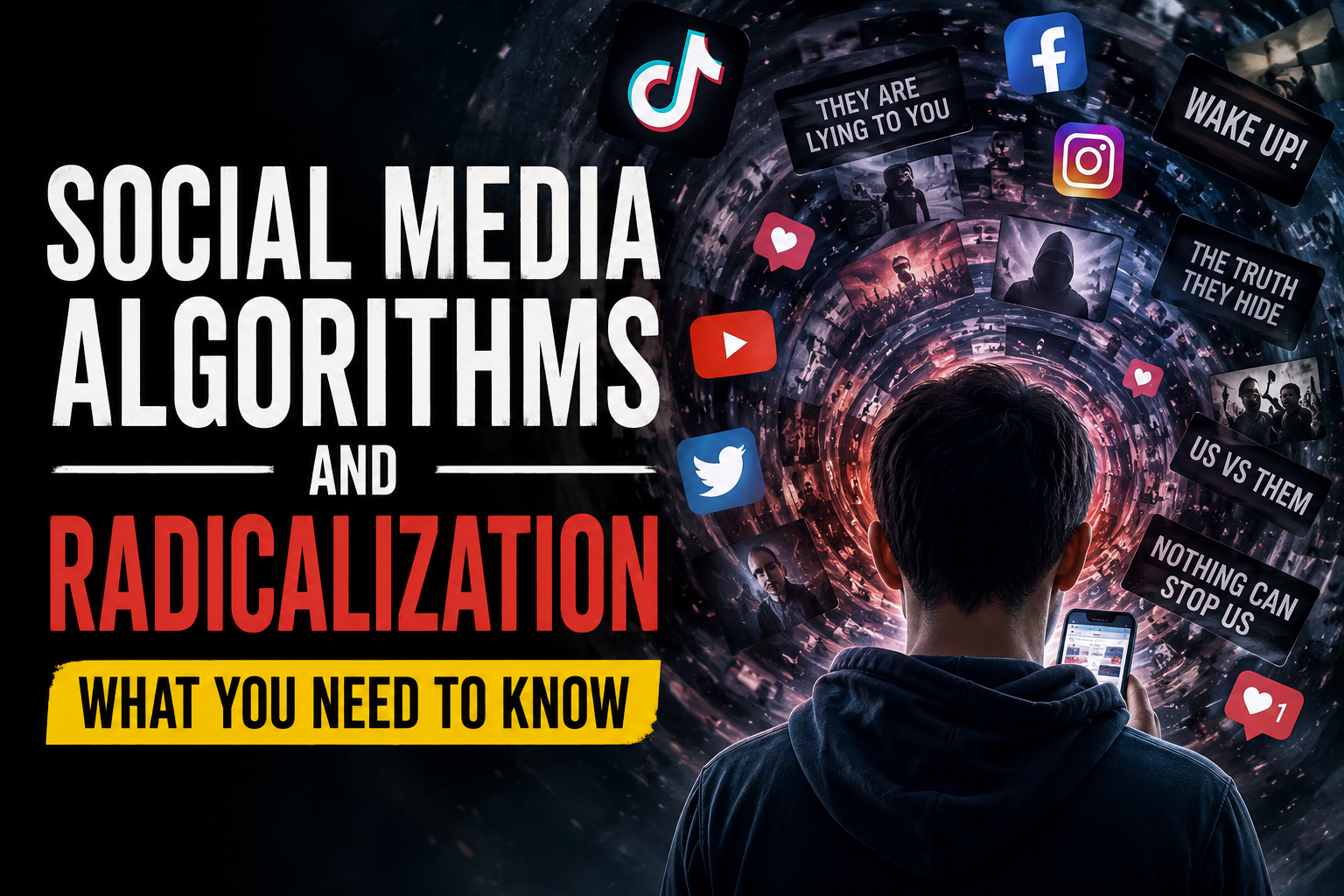
Platforms are built to keep you watching, so they track what you click and feed you more of it. Watch a few videos criticizing immigration and you’ll likely get recommended sharper, more partisan versions of the same argument. Fewer counterpoints show up along the way, not because someone hid them, but because the system learned you don’t click on them. This also nudges people toward talking mostly to others who agree with them. That can make a fringe opinion feel like the mainstream one, and it can harden disagreement into contempt. Whether this produces true “filter bubbles” is actually contested among researchers. Plenty of people still run into opposing views through friends, the news, or plain old searching. Then there’s the emotional pull. Outrage, fear, and moral indignation get clicks, so content that provokes those feelings tends to spread. That’s not proof the algorithm is rooting for extremists. Inflammatory material just happens to perform well, and conspiracy theories and sensational claims ride that wave along with everything else.
Algorithms are also good at connecting strangers with niche interests, which is mostly a good thing, until the niche interest is an extremist movement. The same matching that helps someone find a hobby group helps a recruiter find new members.Grievances, poverty, isolation, political chaos, a shaky sense of identity, family and friends, offline groups, old-fashioned propaganda: all of this matters, often more than what shows up in a feed. Plenty of people scroll past extremist content daily and never buy into it.
What does the research actually show? Recommendation systems can widen someone’s exposure to ideological content and sometimes push them toward more extreme material over time. Many platforms have also tightened their systems to cut down on promoting overtly extremist content. And people still choose what to click, follow, and believe. The algorithm doesn’t do that part for them. Offline relationships tend to matter more than any algorithm in pushing someone toward actual violence. People who think algorithms carry most of the blame point out that they reward divisive content, keep people glued to ideological material longer, make it easier to stumble into extremist communities, and spread misinformation faster than anything before them.
The counterargument: most people who see controversial content never radicalize. People often go looking for content that confirms what they already believe. Radicalisation predates social media by a long shot. You can’t really explain why one person tips over into extremism and another doesn’t without looking at their personal life, their social world, and the politics around them.
Algorithms clearly amplify and speed up radicalization in some cases, but they don’t explain it by themselves. They widen exposure, harden existing beliefs, and connect people who might never have found each other otherwise. Actual radicalization tends to need a mix of tech, psychology, social conditions, and politics working together, which is why most researchers treat algorithms as an amplifier rather than the root cause. That view holds up across communication studies, psychology, political science, and computer science. Platform design shapes what people see, but it works alongside, not instead of, individual vulnerability and the broader world someone lives in.